
Prepare your family for a safe and worry-free Bali holiday with essential medical supplies, travel documents and health advice from BIMC Hospital Nusa Dua’s emergency doctors.
A family holiday in Bali is a wonderful mix of beaches, pools, temples and new food. A little health planning before you leave means that if someone gets sick or hurt, you can deal with it calmly instead of hunting for a pharmacy at midnight. Here is what the emergency doctors at BIMC Hospital Nusa Dua recommend families organise before they fly.
Documents and insurance
Start with the paperwork. Make sure every family member has a valid passport, and save a photo of each one on your phone. Choose travel insurance that covers everyone travelling, including any pre-existing medical conditions, and check that it includes medical evacuation. Save the insurer's 24-hour emergency number in your phone. If anyone in the family has a chronic condition such as asthma, diabetes, epilepsy or a heart problem, ask your GP for a short letter summarising their condition and treatment.
Medicines from home
Pack enough regular medication for the whole trip plus a few extra days, in its original labelled packaging, and keep it in your carry-on bag. Then build a small family kit around it. Children's paracetamol and ibuprofen, with the measuring syringe or cup, will cover most fevers and aches. Oral rehydration sachets are the single most useful item you can bring, because they are the mainstay of treating gastro. An age-appropriate antihistamine helps with insect bites and mild allergic reactions. Anyone with asthma should bring their reliever puffer and spacer, and anyone with a known severe allergy should carry two adrenaline auto-injectors.
| Doctor’s tip: Children's medicine doses depend on weight and the specific product. Check the label or ask your pharmacist before you travel, and write each child's weight on a note inside the kit. |
First-aid basics
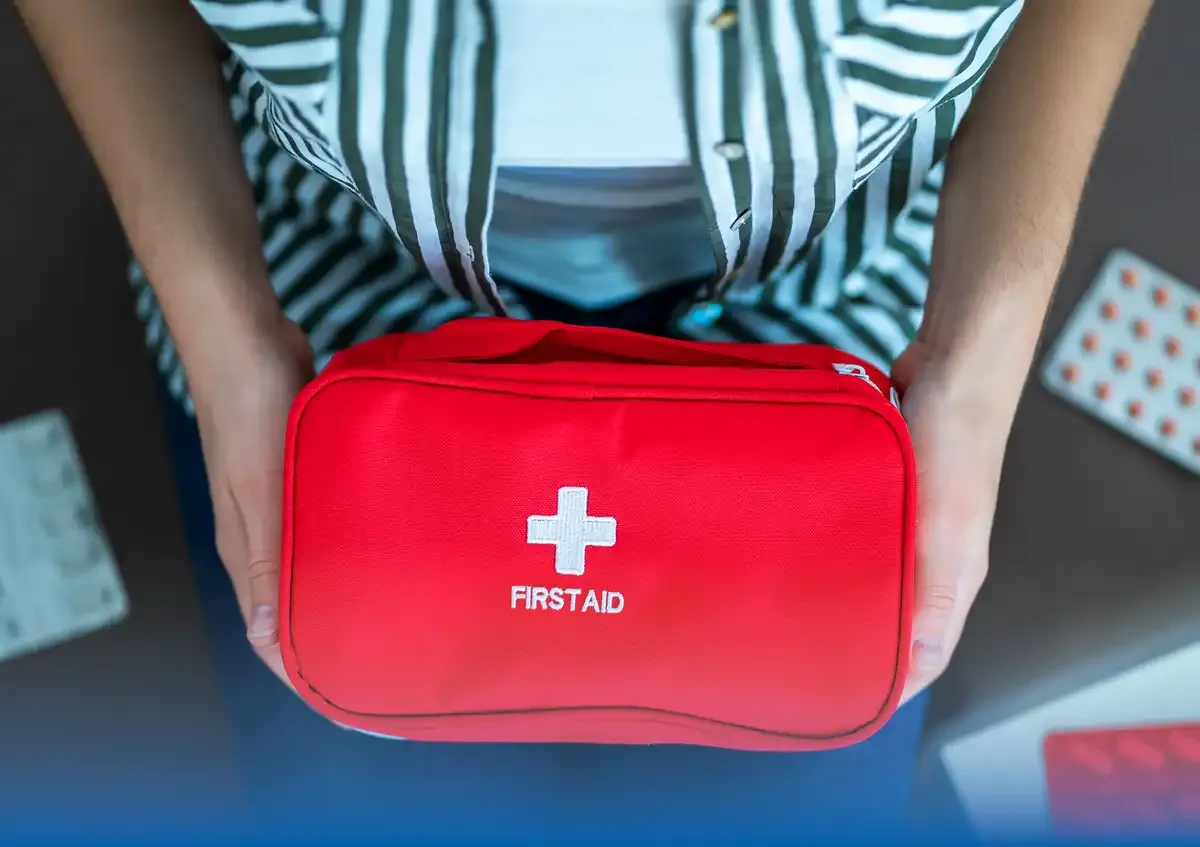
A simple first-aid pouch saves a lot of stress. Include plasters in a few sizes and some waterproof dressings, antiseptic wipes or solution for cleaning cuts and coral scrapes, a digital thermometer, tweezers, small scissors, a crepe bandage and a few sachets of saline for rinsing eyes or wounds.
Sun and mosquito protection
Bali's sun is strong all year round, so pack plenty of broad-spectrum, water-resistant SPF 50+ sunscreen, wide-brimmed hats, sunglasses and long-sleeved rash vests for swimming, plus after-sun gel for the inevitable pink shoulders. Dengue fever is present in Bali and is spread by mosquitoes that bite during the day, so bring an insect repellent suitable for your children's ages and use it at the beach and pool, not just in the evening. Light, long clothing helps at dusk.
Before you leave home
Visit your GP or a travel clinic six to eight weeks before departure to make sure routine and travel vaccinations are up to date. Save the BIMC Hospital Nusa Dua emergency number and your accommodation address in every adult's phone. Agree as a family on a meeting point in case anyone gets separated at the beach or a busy attraction, and make sure older children know a parent's mobile number by heart.
When to stop managing it yourself
A home first-aid kit is for minor problems. Seek medical care quickly if a child has a fever and seems very unwell, shows signs of dehydration, has a cut that is deep or won't stop bleeding, has a head injury followed by vomiting or drowsiness, or has any difficulty breathing. Our emergency team is open 24 hours and cares for visiting children every day.
| Need medical help in Bali? We are here 24/7. BIMC Hospital Nusa Dua’s 24-hour Accident & Emergency team is ready to help visitors, families and residents – day or night. Emergency: +62 361 3000 911 Email: concierge@bimcbali.com Save our number in your phone before you need it. |