
You may have heard a friend mention they had "a scope", or your GP may have suggested an endoscopy. The word sounds technical, but the idea is simple. An endoscopy lets a doctor look inside your body with a tiny camera, without making a single cut.
This guide explains what an endoscopy is, why doctors recommend it, and what to expect, so you can feel informed rather than anxious.
What is an endoscopy?
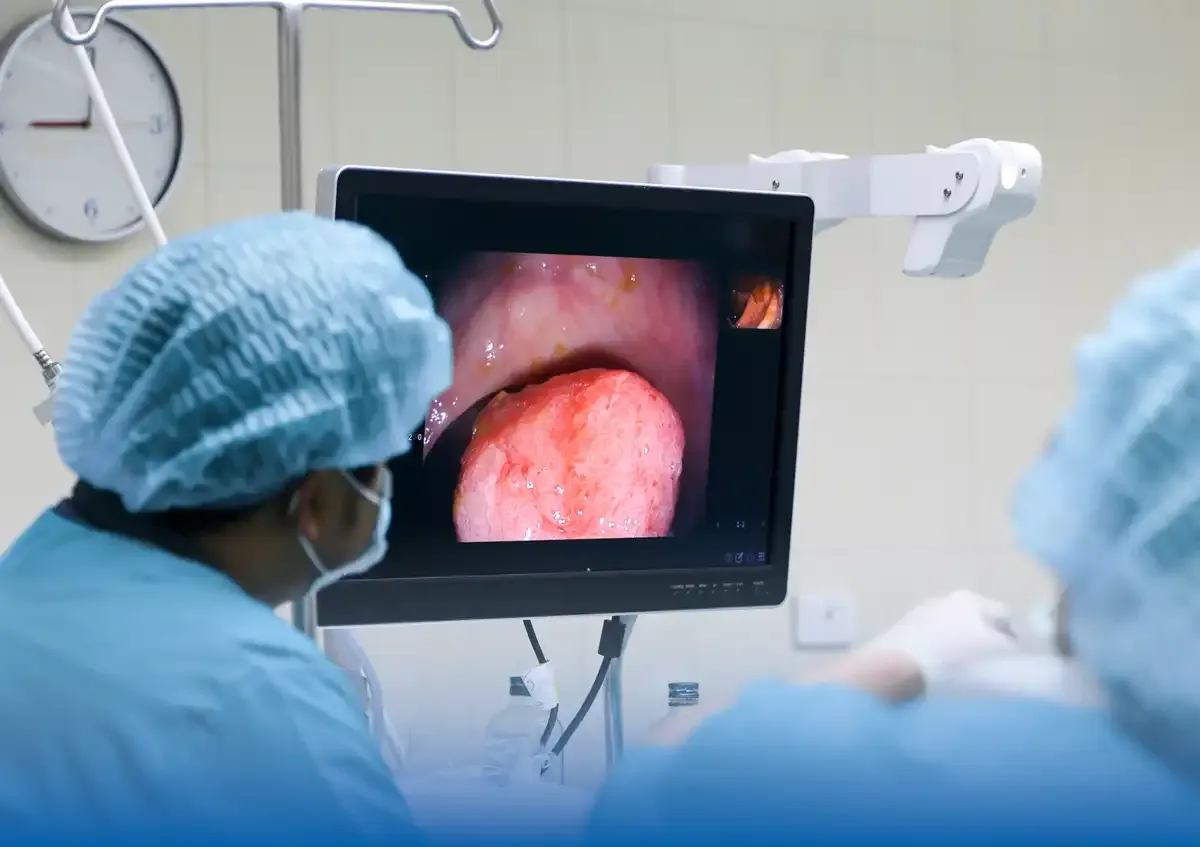
An endoscope is a thin, flexible tube with a light and a small camera at its tip. The doctor gently guides it through a natural opening, such as the mouth or the back passage. The camera sends live, magnified images to a screen.
This gives your specialist a clear view of the lining of your organs. Many problems that don't show up well on an X-ray or blood test can be seen directly this way.
What can an endoscopy do?
An endoscopy is more than a camera check. During the same procedure, your specialist can often:
- Find the cause of symptoms such as ongoing reflux, tummy pain, bowel changes or a lasting cough
- Take tiny tissue samples (biopsies) to test in the laboratory; this is painless
- Treat some problems on the spot, such as removing small growths called polyps or stopping minor bleeding
- Check on known conditions to see how treatment is working
Because looking, testing and sometimes treating happen in one session, an endoscopy can save you extra appointments and give you answers sooner.
The three most common types
Each type of endoscopy looks at a different part of the body:
| Procedure | What it looks at | Common reasons |
|---|---|---|
| Gastroscopy | Food pipe (oesophagus), stomach and the first part of the small bowel | Reflux, indigestion, ulcers, trouble swallowing, low iron |
| Colonoscopy | The large bowel (colon) | Bowel changes, bleeding, polyp checks, follow-up after a positive bowel screening test |
| Bronchoscopy | The windpipe and airways of the lungs | A cough that won't settle, an abnormal chest scan, repeated chest infections |
We will explore each of these in more detail over the coming weeks.
Does it hurt?
This is the question we hear most often. For most endoscopies, you will be given sedation, a medicine that makes you relaxed and drowsy. Many people remember very little of the procedure. For a gastroscopy or bronchoscopy, a numbing spray may also be used on the throat.
You may feel some bloating or a mild sore throat afterwards. These usually settle within a day.
How long does it take?
The procedure itself is usually short: a gastroscopy often takes around 10 to 15 minutes and a colonoscopy around 20 to 45 minutes. Allow a few hours at the hospital in total for check-in, preparation and recovery. Most people go home the same day.
How do I prepare?
Preparation depends on the type of endoscopy. You will usually need to stop eating and drinking for several hours beforehand. A colonoscopy also needs bowel preparation the day before so the bowel is clear. Your doctor will also review any medicines you take, especially blood thinners and diabetes medicines.
Because sedation affects your judgement and reaction time, you should not drive, drink alcohol or sign important documents for 24 hours afterwards. Plan to have someone accompany you home.
We will cover preparation step by step in a later article.
When should I talk to a doctor?
An endoscopy is usually recommended when symptoms continue or a test result needs a closer look. Signs worth discussing with a doctor include ongoing heartburn, difficulty swallowing, changes in bowel habits, blood in your stool, unexplained weight loss or a persistent cough. Next week, we look at these signs in more detail.
Endoscopy at BIMC Hospital Nusa Dua
BIMC Hospital Nusa Dua is accredited by ACHS International (ACHSI), an independent, Australian-developed standard for safety and quality of care. Our specialists perform gastroscopy, colonoscopy and bronchoscopy in a dedicated endoscopy suite, with sedation and recovery care in the same hospital. Our English-speaking concierge team can guide you from your first question to your results.
Questions or ready to book? Email our concierge team at concierge@bimcbali.com.
This article is general information only and is not medical advice. Please talk to your doctor about your own symptoms and health.