Why snoring, restless sleep and daytime tiredness may be more than “just poor sleep”
Do you snore loudly? Wake up feeling unrefreshed despite getting enough hours of sleep? Has your partner noticed that you stop breathing, gasp or choke during the night?
These symptoms are often dismissed as normal consequences of stress, ageing or a busy lifestyle. But sometimes, they can be signs of a common and treatable sleep disorder called obstructive sleep apnoea (OSA).
The important part is that you may not know it is happening.
When Sleep Becomes a Health Risk
Obstructive sleep apnoea (OSA) occurs when the upper airway repeatedly narrows or closes during sleep, causing breathing becomes reduced or temporarily stops. Oxygen levels may fall, carbon dioxide may rise and jolts your body out of deep sleep, often dozens of times an hour, usually without you being aware of it.
Over time, repeated drops in oxygen and constant strain on the body are linked to serious conditions, including:
- Stroke
- High blood pressure that is hard to control
- Heart rhythm problems such as atrial fibrillation, and heart disease
- Impaired in attention, memory and daytime performance
- Mood changes and reduced quality of life
- Type 2 diabetes and weight gain
The relationship between OSA and these conditions is complex, and not every person with sleep apnoea will develop them. A less common form, central sleep apnoea, happens when the brain doesn’t send the right signals to breathe. It can be associated with neurological conditions and heart failure, which is why it needs Neurologist evaluation.
Signs You Might Need a Sleep Test
- Loud, regular snoring
- Your partner notices you stop breathing, gasp or choke during sleep
- Waking up tired even after a full night’s sleep
- Morning headaches or a dry mouth
- Falling asleep during the day, while reading, watching TV or even driving
- Poor concentration, irritability or low mood
- Waking often at night to use the bathroom
If you also have high blood pressure, diabetes, a history of stroke or are overweight, it’s especially worth getting checked.
What Is a Sleep Test?
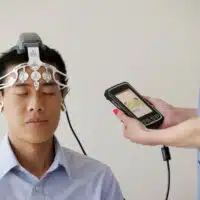
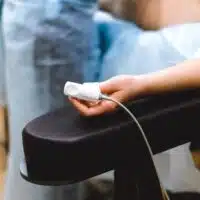
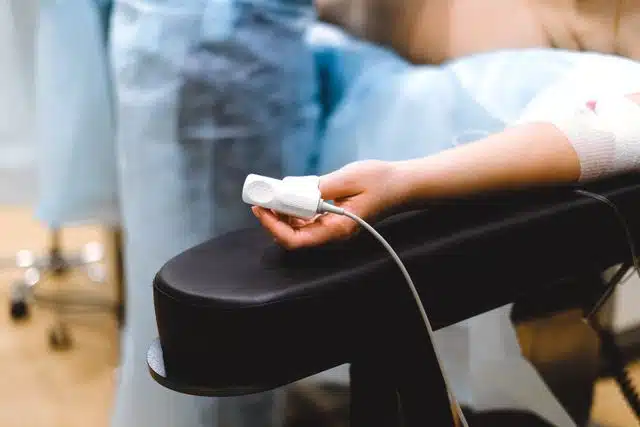
A sleep test, also called a sleep study, monitors your body while you sleep: your breathing, respiratory effort, oxygen levels, heart rate, body position and sleep patterns. Comprehensive polysomnography (PSG) can provide a more complete assessment of sleep architecture and help investigate a wider range of sleep disorders. It is painless and non-invasive, and it gives your doctor the information needed to recommend the right treatment.
Sleep Testing at BIMC Hospital Nusa Dua
Our Sleep Clinic carries out advanced sleep monitoring and evaluation, detecting obstructive sleep apnoea, central sleep apnoea and abnormal oxygen levels during sleep.
What makes BIMC different is the team around the test. Our neurologists, dr. Made Sebastian Dwi Putra Hardika, Sp.Neuro, dr. Gracia Meliana Tanoyo, M.Biomed, Sp.N and dr. Deddy Andaka, M.Biomed, Sp.N, FINR, FINA, can assess how your sleep problem may relate to your brain health and stroke risk.
Depending on the cause, you may also be seen by our ENT specialists for airway-related problems, our pulmonologist for breathing and lung health, or our cardiologists if your heart needs attention. All of this is available at one internationally accredited hospital (ACHSI and LAMPKRS), with on-site CT and MRI if further investigation is needed.
Don’t Sleep on It
Snoring is common. Sleep apnoea is treatable, and diagnosing it early can lower your risk of stroke and other serious illness. If you or your partner recognises any of the signs above, book a sleep assessment by emailing our Concierge team at concierge@bimcbali.com.