Common Workplace Medical Emergencies and How to Respond – You likely view your workplace as a safe haven. It is a controlled environment where you focus on tasks, meetings, and deadlines. You do not expect to face a life-or-death situation between your morning coffee and your lunch break. However, statistics tell a different story. A significant portion of medical emergencies happens on the job.
Whether you work in a high-paced kitchen in Seminyak, a construction site in Canggu, or an air-conditioned office in Kuta, the risk is present. The difference between a manageable incident and a tragedy often comes down to the reaction of the people nearby. That person is you.
Here is a breakdown of the most common medical crises that occur in the workplace and the practical steps you need to take to handle them effectively.
1. Sudden Cardiac Arrest: The Silent Killer
This is the most critical emergency you might face. High stress, sedentary habits, and underlying health issues can lead to heart problems. It can happen to a colleague sitting right next to you. One minute they are talking; the next, they have collapsed and are unresponsive.
Recognizing the Signs
- Collapse: The person falls and does not move.
- No Breathing: They are not breathing normally or are gasping for air (agonal breathing).
- No Pulse: You cannot find a heartbeat.
Time is your enemy here. For every minute that passes without CPR and defibrillation, the chance of survival drops by about 10%.
- Call for Help: Scream for a colleague to call an ambulance immediately. Do not leave the victim alone if you can avoid it.
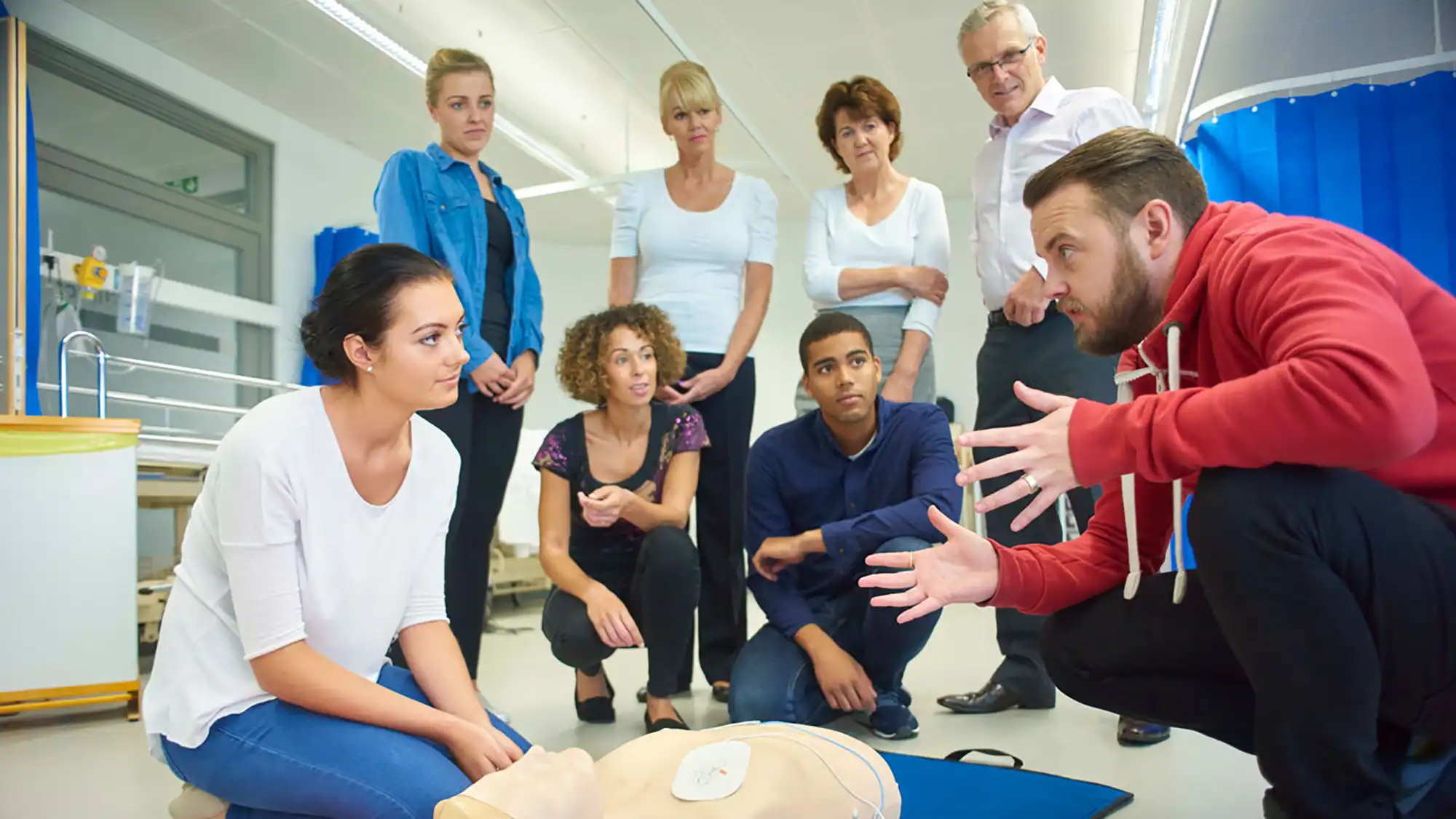
- Start CPR: Push hard and fast in the center of the chest. You are acting as their heart. Do not worry about hurting them; you are trying to save their life.
- Use an AED: If your workplace has an Automated External Defibrillator, use it. The machine will tell you exactly what to do. It can restart a stopped heart.
2. Severe Cuts and Lacerations
In Bali’s thriving hospitality industry, kitchen accidents are a daily occurrence. A slip of a knife or a broken glass can cause severe bleeding. Even in an office, shattered glass or sharp metal edges can cause deep wounds.
Panic causes people to make mistakes. You need to be the calmest person in the room.
- Apply Pressure: Grab a clean cloth, gauze, or even a shirt. Press it firmly directly over the wound. Do not stop to “check” if the bleeding has stopped. Keep pressing.
- Do Not Remove Objects: If there is a piece of glass or metal stuck deep in the wound, do not pull it out. You might unplug a severed artery and make the bleeding worse. Apply pressure around the object and wait for professionals.
3. Slips, Trips, and Falls
Falls are the most common cause of workplace injury globally. A wet floor without a sign, a loose cable, or a fall from a ladder can result in broken bones, spinal damage, or head trauma.
The biggest mistake people make with fall victims is trying to move them too quickly.
- Assess Consciousness: Ask them their name. If they are confused or unconscious, assume a head injury.
- Do Not Move Them: If they have pain in their neck or back, moving them could cause permanent paralysis. Keep them still until medical team arrive.
- Check for Deformity: Look at their limbs. If a leg or arm looks bent in an unnatural way, do not try to straighten it. You could damage nerves or blood vessels.
4. Burns and Scalds
From espresso machines to industrial chemicals, burn risks vary by industry. A severe burn destroys skin and leaves the body vulnerable to infection and fluid loss.
Old wives’ tales about butter or toothpaste do more harm than good. Stick to the medical basics.
- Cool the Burn: Run cool (not ice cold) tap water over the burn for at least 20 minutes. This stops the heat from cooking the deeper layers of tissue.
- Remove Constrictions: Burnt skin swells quickly. Take off rings, watches, or tight bracelets immediately before the swelling makes it impossible.
- Cover Loosely: Once cooled, cover the burn with cling wrap or a clean, non-fluffy cloth to prevent infection. Do not burst any blisters.
5. Why You Need Professional Backup: BIMC Hospital – Kuta
First aid is just the beginning. It buys time. The outcome depends on where the patient goes next. For workplace accidents in Bali, BIMC Hospital – Kuta is your strategic partner.
They understand the urgency of “work accidents” and have tailored their Emergency & Trauma Services to handle them efficiently.
Specialized Trauma Care
A workplace injury often involves complex trauma, such crushed bones, deep lacerations, or head injuries. BIMC Hospital – Kuta is a fully equipped hospital with a multidisciplinary team.
- Surgeons on Standby: We have Orthopedic, Digestive, and Neurosurgeons ready to operate. If a worker falls from a height or suffers a crush injury, these are the specialists who save limbs and lives.
- Advanced Imaging: With on-site CT Scans and C-Arm X-Ray technology, we can diagnose internal bleeding or complex fractures in minutes, not hours.
International Standards
If you manage a team of international staff or work for a global company, you need a facility that meets high standards. BIMC Hospital – Kuta follows international protocols for trauma care. This reduces errors and ensures that the treatment provided matches what your insurance and corporate safety policies require.
24/7 Availability
Accidents don’t always happen between 9 and 5. The hospitality industry runs late into the night. BIMC Hospital – Kuta’s Accident & Emergency Centre is open 24 hours a day, 7 days a week. You never have to wonder if they are open.
Contact Information
Make sure these numbers are printed and posted in your break room, near the first aid kit, and saved in every manager’s phone.
BIMC Hospital Kuta
Jl. Bypass Ngurah Rai No. 100X, Kuta, Badung, Bali 80361
Emergency: +62 361 761 263
Call Centre: +62 811 960 8500
you cannot predict when a workplace accident will happen, but you can predict your response. By learning these simple steps and knowing exactly who to call, you transform from a bystander into a lifesaver. Keep your team safe, stay alert, and trust the professionals at BIMC Hospital – Kuta to handle the rest.
© 2026 BIMC Hospital – Kuta. All rights reserved.