Snoring vs. Sleep Apnea: 7 Signs It’s More Than a Noisy Night – Almost everyone snores once in a while, and most of the time it is nothing more than a noisy nuisance. But snoring vs. sleep apnea is not always an easy call to make in the middle of the night, and getting it wrong can be costly. Sometimes that familiar rumble is a sign of obstructive sleep apnea, a breathing disorder that can quietly strain your heart, your focus, and your safety for years before anyone notices. We wrote this guide to help you and your partner tell the two apart, recognize the warning signs, and know when a nighttime habit deserves a same-day medical visit.
Snoring vs. Sleep Apnea: How Are They Different?
Snoring is a sound. Sleep apnea is a medical condition. That distinction matters more than it might seem.
Simple Snoring
Simple snoring happens when air passes over relaxed tissue in the back of your throat and makes it vibrate. It tends to be steady and continuous, and it often eases up if you switch positions, cut back on alcohol, or treat nasal congestion. On its own, simple snoring rarely causes daytime symptoms.
Snoring Caused by Sleep Apnea
With obstructive sleep apnea, the airway does not just narrow, it briefly collapses. Breathing stops for ten seconds or longer, oxygen levels drop, and the brain jolts you just enough to reopen the airway, usually with a loud snort or gasp. Then you drift back to sleep and the cycle repeats, sometimes more than 30 times an hour, all night long. Most people never remember any of it, which is exactly why sleep apnea is so often missed.
7 Signs Your Snoring May Be Sleep Apnea
1. Loud Snoring Broken Up by Silence and Gasping
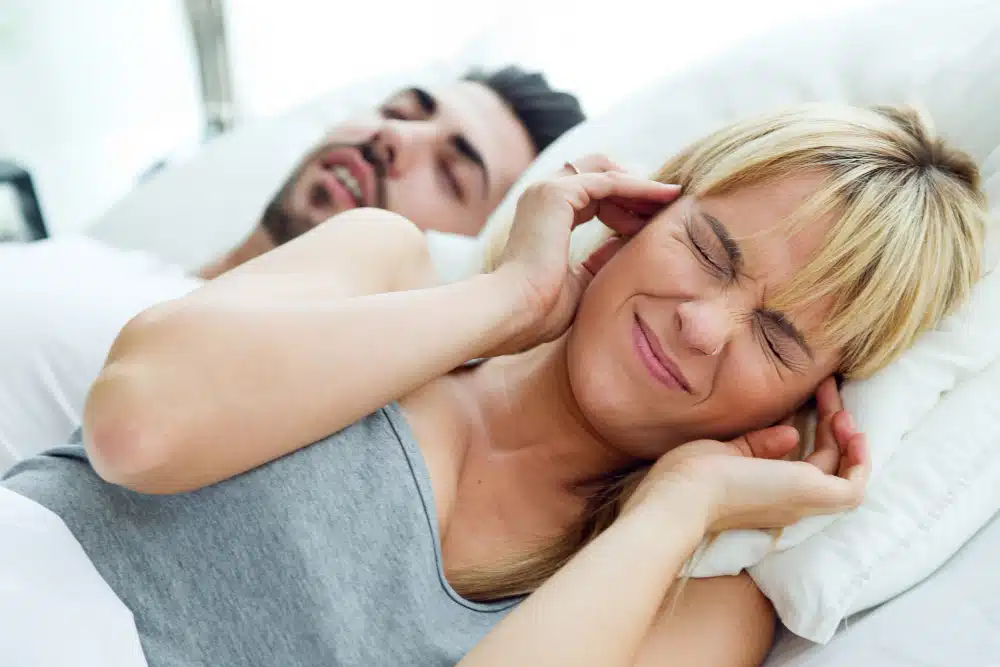
Simple snoring drones on at a steady volume. Sleep apnea snoring follows a distinct pattern: loud snoring, a pause, then a snort, gasp, or choking sound as breathing restarts. A bed partner usually notices this rhythm before the person snoring ever does.
2. Someone Has Seen You Stop Breathing
Because the pauses are so brief, you will likely have no memory of them. If a partner tells you that your breathing stops and starts during the night, take it seriously, even if you feel fine when you wake up.
3. You Wake Up Gasping or Choking
Waking suddenly with a gasp, a choking sensation, or a pounding heart is a classic red flag for obstructive sleep apnea rather than ordinary snoring.
4. You Are Exhausted No Matter How Long You Sleep
Because sleep apnea keeps interrupting deep, restorative sleep, you can spend eight or nine hours in bed and still feel drained the next day. Excessive daytime sleepiness, especially the kind that makes you doze off while driving, working, or watching television, points to something more than simple snoring.
5. Morning Headaches, a Dry Mouth, or a Sore Throat
Low oxygen levels overnight can trigger headaches that show up right after you wake, along with a dry mouth or sore throat from breathing through an open mouth.
6. High Blood Pressure That Is Hard to Control
Repeated drops in blood oxygen force your cardiovascular system to work harder, which is one reason obstructive sleep apnea is closely linked to high blood pressure, especially blood pressure that does not respond well to medication.
7. Trouble Concentrating or Sudden Mood Changes
Fragmented sleep affects the brain long before it affects the body. Watch for memory lapses, difficulty focusing, irritability, or a low mood that does not match what is going on in your life.
None of these signs alone confirms sleep apnea, but two or three together, especially alongside loud snoring, are a strong reason to ask your doctor about a sleep study.
Who Is Most at Risk for Sleep Apnea?
Anyone can develop obstructive sleep apnea, but some factors raise the odds:
- Carrying excess weight, since fat deposits around the airway can narrow it
- Getting older, as throat muscle tone naturally decreases with age
- Having a family history of sleep apnea or a naturally narrow airway
- Smoking or regularly drinking alcohol in the evening
- Ongoing nasal congestion or enlarged tonsils
A 2019 analysis published in The Lancet Respiratory Medicine estimated that 936 million adults ages 30 to 69 worldwide have mild to severe obstructive sleep apnea, and roughly 425 million have moderate to severe disease. Most of them do not know it.
When Does Snoring Become a Medical Emergency?
Occasional snoring is rarely dangerous on its own. Sleep apnea, left untreated, is a different story. Over months and years, the repeated oxygen drops raise the risk of high blood pressure, heart disease, irregular heartbeat, and stroke, and severe daytime sleepiness raises the risk of falling asleep at the wheel or on the job.
Certain situations call for prompt, same-day medical attention rather than watchful waiting:
- Waking up gasping, choking, or with chest pain
- A new or worsening irregular heartbeat, particularly alongside loud snoring
- Falling asleep suddenly while driving or during a conversation
- Needing surgery or sedation soon, since anesthesia and sedatives can make undiagnosed sleep apnea more dangerous
If any of these apply to you, do not wait for your next routine checkup. Sleep apnea is very treatable with options like CPAP once it is diagnosed, but the health risks of leaving it untreated build quietly in the background.
How Sleep Apnea Is Diagnosed and Treated
A sleep study, also called polysomnography, is the only way to confirm sleep apnea. It records your breathing, heart rate, and blood oxygen level overnight, either in a sleep lab or, for some patients, through a home sleep apnea test. From there, treatment usually includes:
- Lifestyle changes, such as losing excess weight, limiting alcohol, quitting smoking, and sleeping on your side
- CPAP therapy, which uses a machine to deliver steady air pressure and keep the airway open overnight
- Oral appliances, custom-fitted devices that reposition the jaw or tongue for people who cannot tolerate CPAP
- Surgery, considered in select cases when other treatments do not work
Your Medical Partner in Bali: BIMC Hospital Kuta
If you or your partner cannot tell whether it is simple snoring or something more, you do not have to figure it out alone. Our 24-hour Medical Centre at BIMC Hospital Kuta offers consultations, medical check-ups, and access to an in-house laboratory, so you can get clear answers instead of guessing. Our doctors and nurses are fluent in English and will walk you through your symptoms, your risk factors, and next steps, including a referral for a sleep study if one is needed.
We also operate a 24-hour Accident and Emergency Centre, so if you ever experience chest pain, a choking sensation, or severe breathing trouble, help is always close by. BIMC Hospital Kuta holds international accreditation from the Australian Council on Healthcare Standards, giving you the same safety standards you would expect at home.
Snoring vs. sleep apnea is not a question you have to answer with guesswork. If the signs above sound familiar, reach out to BIMC Hospital Kuta and let us help you find out for certain.
- Location: Jalan Bypass Ngurah Rai Number 100X, Kuta, Bali
- 24 Hour Emergency Call: (+62 361) 761 263
- WhatsApp (Text Only): +62 811 3960 8500
© 2026 BIMC Hospital – Kuta. All rights reserved