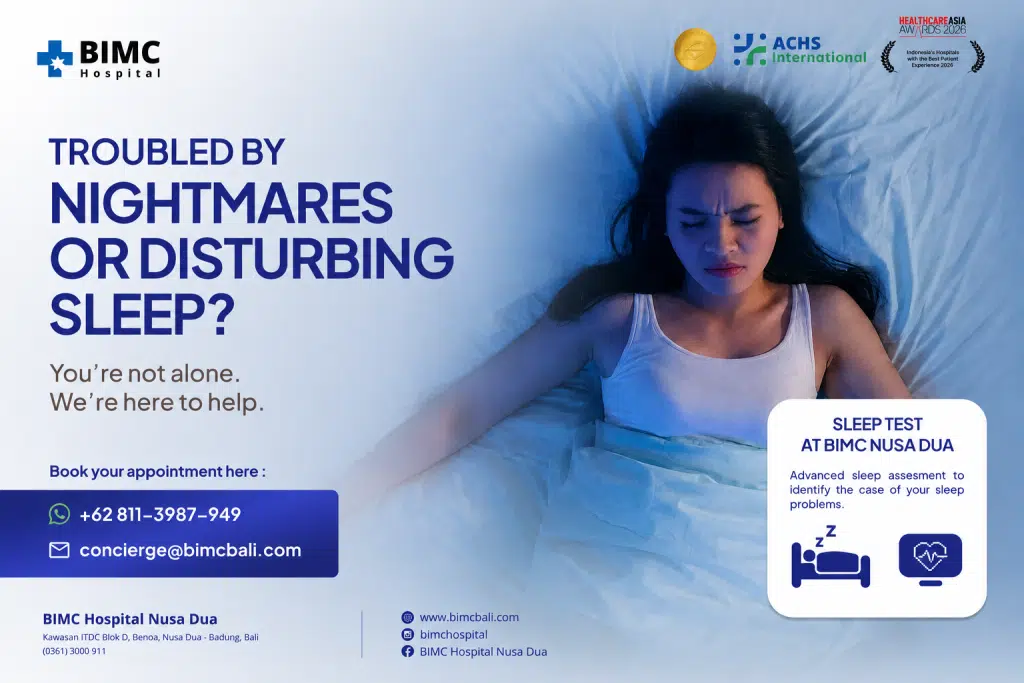
Waking from an unsettling dream once in a while is part of normal sleep. The concern begins when nightmares become frequent, disturb your rest, or leave you anxious about going to bed.
Nightmares are vivid, unpleasant dreams that can cause strong feelings such as fear, distress, or panic. They commonly occur during REM sleep, the stage associated with vivid dreaming. If they happen repeatedly, they can interrupt sleep and affect how you function after waking.
Nightmares Are More Common Than You Might Think
A recent international study published in the Journal of Sleep Research in 2026 examined sleep and dream patterns among 15,854 adults across 16 countries. The researchers found that 11% of participants reported experiencing nightmares at least weekly in 2021, compared with 6.9% in 2019. The researchers also observed a relationship between nightmare frequency and sleep duration.
What Can Trigger Repeated Nightmares?
Emotional stress, traumatic experiences, changes in sleep schedules, certain medications, alcohol, illness, and other sleep difficulties can contribute to disturbing dreams. In some cases, nightmares may occur alongside conditions such as insomnia or other sleep disorders.
The relationship can also work in both directions. Research published in 2025 found that greater sleep disturbance on one night was associated with a higher likelihood of nightmares on the following night.
This means recurring nightmares may be worth looking at as part of your overall sleep pattern rather than treating each disturbing dream as an isolated event.
Could Your Nightmares Be Affecting Your Day?
Repeated nightmares can make you reluctant to go to bed, shorten your sleep time, or leave you feeling tired the next morning. Over time, disrupted sleep may affect concentration, mood, energy, and everyday activities.
Pay attention to what happens around the nightmares. Do they occur after particularly stressful days? Are you waking several times during the night? Do you struggle to fall asleep again? These details can help a healthcare professional understand the bigger picture.
When a Nightmare Becomes a Sleep Problem
If nightmares repeatedly wake you, make you hesitant to go to bed, or leave you feeling exhausted and unsettled the following day, the problem may extend beyond the dream itself. Repeated disruption can gradually change your sleep routine, creating anxiety around bedtime and making restful sleep more difficult to achieve.
This is where looking at the complete sleep pattern becomes important. Your doctor may consider how often the nightmares occur, when they happen during the night, whether you wake completely, and whether other sleep difficulties are present.
Rather than trying to interpret every dream on your own, a proper sleep assessment can help determine whether there is an underlying issue affecting your rest.
BIMC Nusa Dua Hospital has a medical team that can help patients explore recurring nightmares, disrupted sleep, and related concerns through an appropriate clinical assessment. Depending on the findings, further evaluation may be considered to better understand what is happening during sleep.
For reservation: concierge@bimcbali.com
BIMC Nusa Dua Hospital / Sleep Test & Sleep Care